South Korea Floods 2025
South Korea Floods 2025: Heavy rains have caused deadly landslides and floods in South Korea, killing at least 17 people. Rescue teams continue to work as authorities warn of ongoing dangers from persistent rainfall.
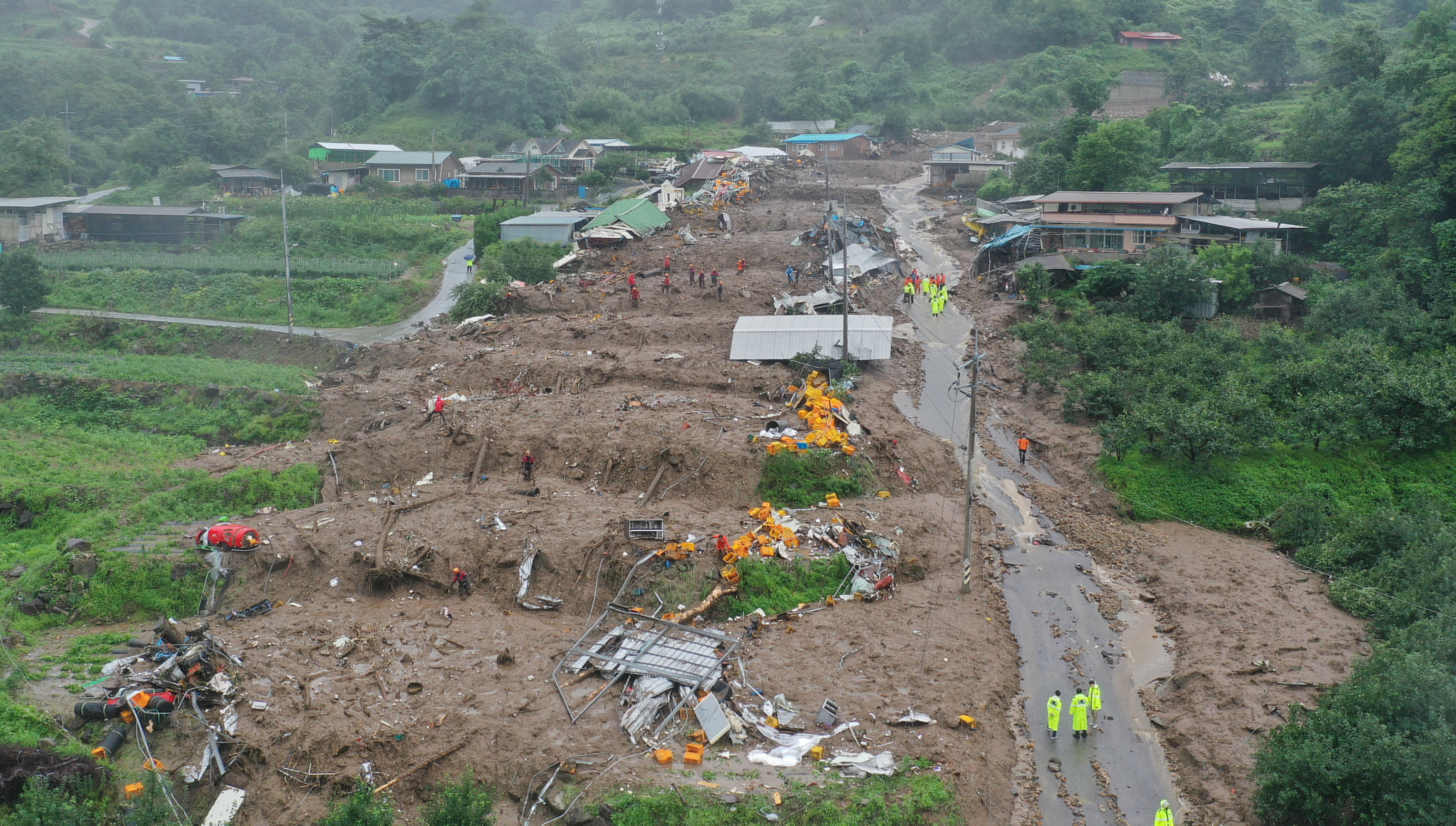
Image: Reuturs
Deadly Floods and Landslides Devastate South Korea
South Korea faces one of its worst natural disasters this year. Prolonged heavy rains triggered severe floods and landslides across several provinces. So far, the death toll stands at 17, with dozens injured and thousands displaced as rivers overflow and hillsides collapse.
Meteorologists link the intense rainfall to the seasonal monsoon and changing climate conditions. These factors caused water levels to surge, overwhelming the country’s flood control systems. Areas near Seoul and in the southern provinces, like Gangwon and Jeolla, suffered the most damage.
Scale of the Disaster and Impact on Communities
Floodwaters submerged entire neighborhoods, while landslides buried homes and roads. Many residents had to evacuate quickly as mudflows engulfed their villages.
Hospitals have been busy treating injuries from collapsing buildings and accidents on slippery roads. Power outages and damaged bridges slowed rescue efforts. Many schools and public facilities remain closed. Transportation services face ongoing disruptions due to flooded and blocked roads.
Ongoing Rescue and Relief Efforts
South Korean authorities deployed thousands of rescue workers, including firefighters, police, and soldiers. They conduct search and rescue missions in dangerous conditions, using helicopters and boats to reach isolated residents.
Officials set up emergency shelters to provide temporary housing, food, and medical aid. Volunteers and local groups help distribute supplies and support vulnerable people, such as the elderly and children.
The government issued severe weather warnings, urging people to avoid travel and stay alert for new landslides or floods.
Government Response and Infrastructure Challenges
President Yoon Suk-yeol addressed the nation, offering condolences and promising swift aid. The government allocated emergency funds to help affected areas and speed up repairs.
Officials admit that climate change has made seasonal rains heavier and more destructive. They plan to upgrade dams, levees, and other flood defenses to better handle extreme weather.
Urban planners and disaster experts call for improved early warning systems and stricter land use rules, especially in flood-prone and mountainous regions.
Forecast Warns of Continued Heavy Rainfall
Meteorologists predict the monsoon rains will continue for several more days. This raises fears of further flooding and landslides. Authorities urge residents in high-risk areas to prepare for possible evacuations.
Experts stress that while monsoons are natural, their rising intensity relates to global warming. They emphasize the need for urgent action to boost disaster readiness.
Human Stories Amid the Disaster
Beyond numbers, many families share stories of loss and survival. People recall rushing to safety as floodwaters rose rapidly. Rescue workers describe their dangerous missions to save trapped residents.
Local charities and international aid groups started coordinating relief efforts to rebuild homes and provide counseling to trauma victims.
Read More..- Massive Fire Erupts at Iran’s Largest Oil Refinery, One Dead
Lessons and Future Preparedness
This tragedy highlights South Korea’s urgent need to adapt to new climate challenges. Experts suggest investing in green infrastructure, sustainable urban planning, and disaster education.
The government’s response and citizen solidarity show strength but also expose vulnerabilities. Addressing these gaps will better protect lives and livelihoods in the future.
Get More Info on Your Feed: Follow Us On Instagram